
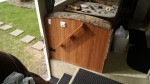
 There are three switches located on the wall when you first enter the Mirada. These control the steps (UP/DOWN), the outside porch light, and an inside ceiling light.
The switch location is very convenient if your standing outside, but if you need to operate any of these switches from inside the Mirada, you need to bend way over and darn near fall out the door. Continue reading “Relocating entry step and porch light switches”

 The first time we slept in the Mirada, we both agreed, the reading lamps above the bed are nice and bright for reading, but needed dimmers for watching TV or whatever else.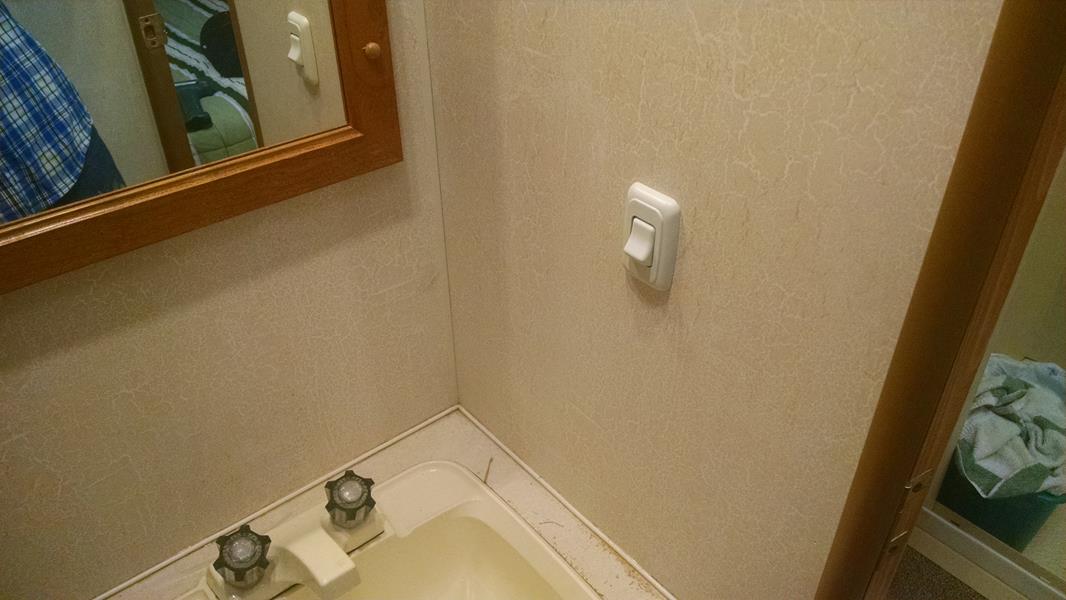
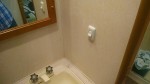 The bathroom was originally wired with a standard ole two bulb ceiling light fixture. OFF – ONE BULB – BOTH BULBS.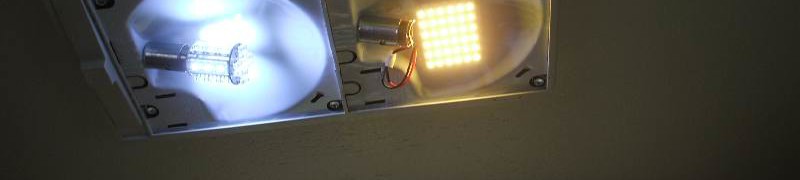
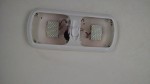 One of the easiest and least expensive ways to make the coach battery last longer is to reduce the electrical loads placed on the battery. Every ceiling light bulb in the Mirada uses 1.4 amps when its turned on. The double fixtures (two bulbs) draw almost 3 amps when they’re turned on.
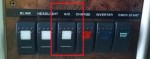 I’m like the way Japanese cars allow you select the A/C system with a separate button, regardless of the heater / AC mode selector switch. (They do not allow me to turn off the AC when in defrost mode, even though I would like to be able to do that)
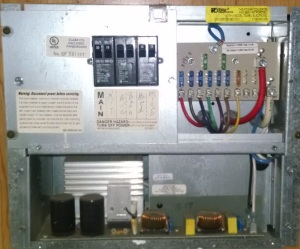 Our Mirada originally came with an electronic version (7345RU) of the old single stage converter / charger (6345). These units are designed to supply the coach with 12 volts and recharge the coach battery any time shore power (or generator power) is applied.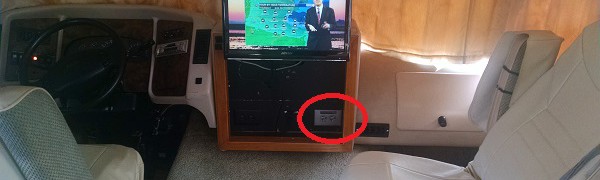
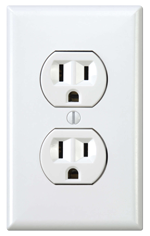 Having a generator is nice, but there are occasions that it doesn’t make sense to run it. i.e. When we travel down the road and need to plug in a cell phone or lap top to re-charge the battery.
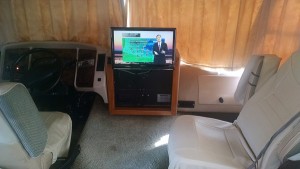 Our “New to Us” Mirada came with two LCD TVs, one in the bedroom and one in the trucks center hump. Neither one had a CD player. They were both digital, but the front one was an older model that had separate Analog and Digital antenna inputs. Both TVs were powered by 110 volts ac. I prefer the TVs to run off of 12 volts, that way I don’t need shore power or run the generator or inverter to watch TV.
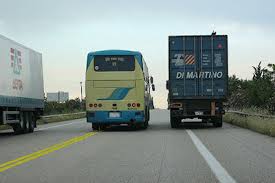 On those very, very, very rare occasions that I actually pass another vehicle on the highway, The driver of the other vehicle will blink their headlights to signal me its ok to pull back in the lane. The normal response is a “thank you”, by blinking my tail lights or brake lights.
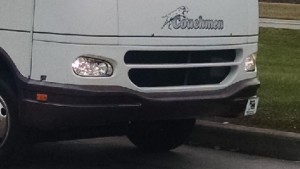 Daytime running lights (DRL) are a good idea, they make the vehicle easier to see, especially if your blind and failed to see this oversize house coming at you down the road.